
At a time when the phrase “japa” has become almost synonymous with the Nigerian medical profession, there are still doctors who have chosen to remain behind — working long hours, attending to overwhelming numbers of patients and carrying a healthcare system under enormous pressure.
They may not make the headlines. They may not be celebrated with awards. They may not have the opportunity to seek greener pastures abroad. But every day, they show up. And for many Nigerians who walk into hospitals and laboratories desperately seeking help, these doctors are the difference between life and death.
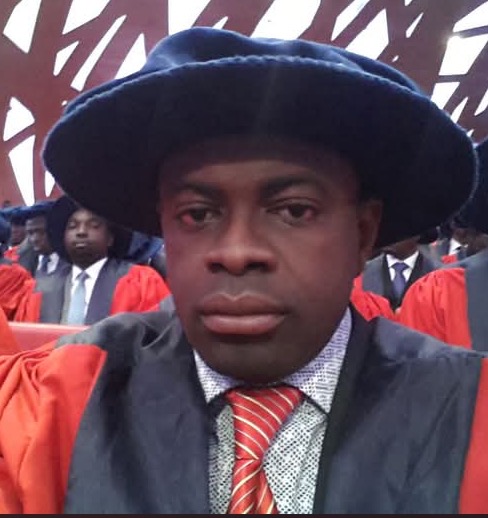
One of such medical professionals is Dr. Emeka Kevin Mgbe, a Consultant Radiologist at the University of Nigeria Teaching Hospital (UNTH), Enugu, and a Senior Lecturer in the Department of Radiation Medicine, College of Medicine, University of Nigeria. A medical doctor trained at the University of Nigeria, Dr. Mgbe has built a career combining clinical practice, teaching and research. But beyond his impressive professional credentials lies another story — one of commitment to patients at a time when Nigeria’s health sector is losing some of its finest hands to migration.
At Champion Diagnostics Laboratory in Enugu State, Dr. Mgbe is reportedly one of the few doctors available to attend to patients, while several colleagues who would ordinarily share the workload have left the country in search of better opportunities. Yet, despite the pressure, the workload and the obvious challenges, he continues to attend to patients. He works. He keeps showing up. And, importantly, he does so with a cheerful disposition.
That is the part of Nigeria’s medical crisis that statistics cannot fully capture. Behind every doctor who leaves Nigeria is often a heavier burden placed on those who remain. The remaining doctors have to see more patients, work longer hours and shoulder responsibilities that would ordinarily be shared among larger teams. The consequences can be devastating.When a critically ill patient arrives at a facility and there are too few doctors to attend to the growing number of patients, precious time can be lost. And in medicine, time can mean life.
Another example is Dr. Joseph Nwankwo and his team at Josan Clinics Ltd, a private secondary healthcare facility in Achara Layout, Enugu. Established in 2005, the facility has continued providing medical services to residents and families who depend on accessible healthcare. The importance of such facilities becomes even more apparent in an environment where patients sometimes struggle to find healthcare professionals available to attend to them promptly.
Dr. Nwankwo and his team deserve recognition for remaining committed to serving their community. Their contribution may appear ordinary to those who simply walk into a clinic and receive treatment. But in today’s Nigeria, continuing to provide quality and compassionate healthcare is anything but ordinary.
THE DOCTORS WHO STAY
Dr. Mgbe, Dr Nwankwo and his team, are not alone. Across Nigeria, there are countless doctors, nurses, laboratory scientists, pharmacists and other healthcare professionals who continue to serve despite difficult working conditions. Many of their stories remain unknown. They work in teaching hospitals, government hospitals, private clinics, laboratories and rural health facilities. They attend to patients when they are exhausted. They improvise when resources are limited. They continue caring for Nigerians even as some of their colleagues leave for countries where healthcare professionals are better paid and working conditions are often more attractive.
GOVERNMENT MUST ASK: WHY ARE OUR DOCTORS LEAVING?
However, celebrating those who remain should not distract from the bigger question. Why are so many doctors leaving in the first place? Nigeria cannot solve its healthcare crisis simply by asking doctors to stay. Doctors are human beings too. They have families. They have aspirations. They have financial responsibilities. They deserve decent salaries, functional hospitals, adequate equipment, professional development and a working environment that allows them to practise medicine safely and effectively.
If a doctor spends years studying medicine, completes residency and builds valuable expertise, only to discover that another country offers significantly better opportunities and working conditions, it is hardly surprising that many will consider leaving. This is why the government’s response must go beyond appeals and patriotic speeches. The economic conditions pushing professionals out of the country must be addressed. The government must make Nigeria a country where highly trained professionals can see a future.
REWARD THOSE WHO STAY
While efforts are made to reverse the factors driving migration, the doctors who continue to serve Nigerians should not be forgotten. Government at all levels should identify and recognise outstanding healthcare workers who have remained committed to their communities under difficult circumstances.
Doctors like Dr. Mgbe, Dr. Nwankwo and his team, and the countless unnamed healthcare professionals quietly saving lives across Nigeria deserve appreciation, incentives and meaningful institutional support. Recognition does not necessarily have to mean publicity alone. It can come through professional awards, improved working conditions, special incentives, research support, housing assistance, career development opportunities and other practical measures that demonstrate that the country values their sacrifice.
If government can recognise athletes, entertainers and other professionals who bring honour to the country, it should equally recognise medical professionals who spend their lives protecting the health of Nigerians.
NIGERIA CANNOT AFFORD TO LOSE EVERYONE
There is nothing wrong with Nigerian doctors seeking opportunities abroad. The problem arises when the country loses so many of its trained medical professionals that those who remain can no longer cope with the pressure. Nigeria invests years and public resources in training doctors, only for many of them to eventually leave because the country’s economic and professional environment cannot retain them. That is not merely a medical problem. It is an economic problem, a governance problem and ultimately a national survival problem.
The solution therefore requires a comprehensive approach. Government must invest in healthcare infrastructure, improve remuneration, strengthen hospitals, create safer working environments and address the wider economic pressures that make leaving Nigeria increasingly attractive to professionals. At the same time, Nigerians must also support and patronise healthcare facilities and professionals who demonstrate genuine commitment to patient care.
The story of Nigeria’s healthcare system should not only be about the doctors who left. It should also be about the doctors who stayed. The ones who wake up every morning and report to work. The ones who attend to patient after patient. The ones who carry workloads that should ordinarily be shared among several professionals. The ones who remain cheerful despite the challenges. The ones whose names may never appear in newspapers but whose hands have touched and saved countless lives.
Nigeria must see them. Nigeria must appreciate them. And Nigeria must give them reasons to stay. Because when the last committed doctor begins to look for a way out, the question will no longer be “Why are our doctors leaving?” The question will be: “Who will remain to treat us?”
Written by Journalist
Chinyere Nnaemeka
07038203411