

By Dr. Kelechi Elsie Chukwunyere
OD, RN
Writing from Houston, Texas, USA
As Imo State looks toward the next chapter of its development, the question before its people is no longer simply who can occupy political office, but who can translate ideas into opportunities, infrastructure into economic activity, and the energy of its young population into a productive force.
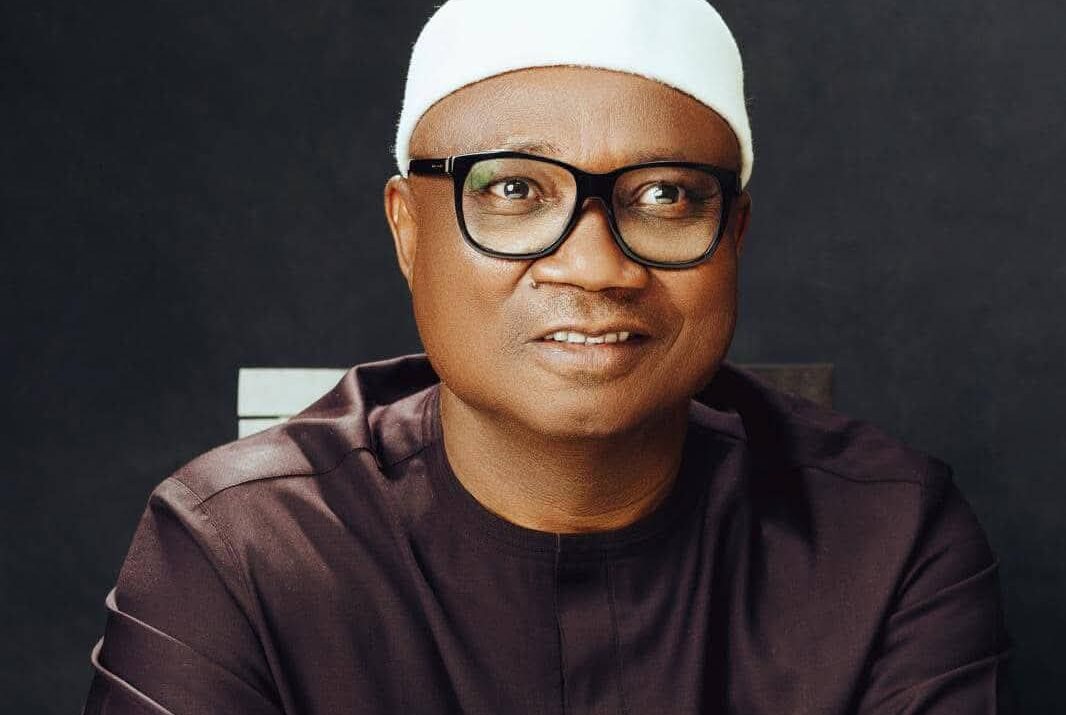
It is against this backdrop that the emerging development vision of Chief Charles Umuezurike Orie deserves attention.
A businessman, philanthropist and former Managing Director/CEO of the Imo State Oil Producing Areas Development Commission (ISOPADEC), Orie has increasingly presented a philosophy of development that goes beyond government spending. His emphasis is on building people, expanding opportunities and creating the conditions under which businesses, entrepreneurs and communities can grow.
From Projects to Economic Possibilities
One of the clearest indicators of Orie’s development philosophy can be found in his record at ISOPADEC. In 2021, contemporary reports documented the flag-off of 38 projects across the oil-producing areas of Oguta, Ohaji/Egbema and Oru East. The projects included hospitals, schools, healthcare facilities, roads and other community infrastructure.
In later interviews, Orie also highlighted three 20-bed modern hospitals, rehabilitation of healthcare facilities, a concrete bridge and a skill-acquisition centre among initiatives associated with his tenure.
But the larger lesson is not simply the number of projects completed.
A hospital is not merely a building; it requires doctors, nurses, technicians, administrators, suppliers and support workers. A skill-acquisition centre is not simply a structure; it can become a pipeline from training to entrepreneurship. Roads and bridges are not only infrastructure; they can connect farmers, traders, businesses and communities to markets.
That is where the idea of building bigger becomes important.
From Infrastructure to an Innovation Economy
For Imo to compete in a changing Nigerian and global economy, development must increasingly move from infrastructure alone to the creation of economic ecosystems.
A future-focused administration could explore an Imo Innovation Fund capable of providing seed financing, grants or low-interest support to promising young entrepreneurs. Technology and innovation districts could bring together start-ups, universities, investors, training institutions and technology companies.
The state could also develop industrial and agro-processing corridors, linking agricultural production to storage, processing, transportation and markets. Instead of exporting raw agricultural products and importing finished goods, Imo could create opportunities for young entrepreneurs and investors to participate throughout the value chain.
Another important opportunity is the diaspora.
Imo has a large and economically influential diaspora. A structured Diaspora Investment Platform could connect Imo professionals abroad with credible investment opportunities at home, while providing transparent mechanisms for partnerships in technology, healthcare, education, agriculture, manufacturing and infrastructure.
These are the kinds of ideas that can transform a development conversation from simply asking, What can government build? to asking, What economic system can government help create?
Jobs Must Come From a Growing Economy
For a state with a large youthful population, government employment alone cannot provide the future young Imolites deserve.
The more sustainable approach is to create an environment in which private enterprise, agriculture, technology, manufacturing, skilled trades and small businesses can flourish.
Orie’s public profile has associated his development thinking with skill acquisition, agricultural job creation, youth empowerment and scholarships.
The bigger challenge, however, is connecting those interventions to capital and markets.
That means start-up financing, business incubation, mentorship, university-industry partnerships and practical technical education. It also means encouraging research institutions and universities to move promising ideas from laboratories and classrooms into commercial products and services.
Imo’s universities should not exist separately from the economy. They should become partners in solving the state’s problems.
Research should lead to innovation. Innovation should lead to businesses. Businesses should create jobs.
Technology and the Next Frontier
The digital economy provides another opportunity.
In August 2026, the Imo State Government and the United Nations Development Programme discussed expanding digital opportunities, strengthening digital skills, supporting technology-driven businesses and creating jobs. The discussions also referenced the Imo Digital City as a hub for digital learning, innovation and technology-driven businesses.
This shows that the digital economy is already part of the wider development conversation in Imo.
The challenge for future leadership will be to make such opportunities broader and more inclusive—reaching young people beyond Owerri and other major urban centres.
A future-focused Imo should be able to produce software developers and technology entrepreneurs, but also skilled electricians, mechanics, healthcare professionals, agricultural entrepreneurs, manufacturers, artisans, researchers and business owners.
Innovation should not be defined only by smartphones and software. It should mean finding smarter ways to solve Imo’s problems.
Building for the Generation After Politics
Perhaps the most important test of any ambitious development vision is whether it can outlive the politician who introduces it.
The real measure of leadership is not how impressive a project appears when it is commissioned. It is whether that project continues to create value years after the commissioning ceremony.
That principle gives greater meaning to the idea of dreaming big and building bigger.
It means thinking beyond one administration. It means developing renewable-energy clusters that can support businesses and communities. It means creating agro-processing zones instead of simply distributing agricultural inputs. It means building technology ecosystems rather than isolated computer centres. It means connecting universities to industry, entrepreneurs to finance, and young people to opportunities.
If translated into governance, such an approach could help position Imo as a state where young people are prepared not merely to seek employment but to create enterprises; where infrastructure is planned around economic growth; where innovation responds to local needs; and where government acts as a catalyst for private initiative.
Chief Charles Orie’s political proposition can therefore be examined beyond the familiar language of elections. At its heart is a larger development question:
What kind of Imo should be built for the next generation?
For those who believe that the state’s greatest resource is ultimately its people, the vision of dreaming big and building bigger offers an important framework for that conversation.
Because the future of Imo cannot be built on yesterday’s ideas alone.
It must be imagined boldly, financed intelligently, connected to opportunity—and built to last.