
PDP, APC and the Unfinished Story of Development in the 12 Wards
By CHIGOZIE Ubah Stephen
For 26 years, democracy has endured in Nigeria. Governments have changed, political alliances have shifted, and parties have alternated in influence. Yet, in the communities of Isiala Mbano, a fundamental question continues to demand an honest answer:
After more than two decades of democratic governance, where is the dividend of democracy?
For residents of Amaraku, Umunkwo, Ogbor, Ibeme, Osu Owere I, Osu Owere II, Osuama/Anara, Ugiri/Oka, Amauzari, Obollo, Umuozu and Osuachara, the question is not theoretical. It is about the roads they travel, the schools their children attend, the healthcare available to their families, the opportunities available to their youths and the economic infrastructure upon which their communities depend.
The widespread criticism is that, despite the years of democratic rule and the involvement of the Peoples’ Democratic Party (PDP) and All Progressives Congress (APC) in the political administration of Imo State, the people of Isiala Mbano have not experienced the kind of comprehensive, equitable and sustainable transformation they expected.
That criticism deserves serious examination.
THE POLITICAL PROMISE VERSUS THE GRASSROOTS REALITY
Every election cycle brings familiar promises.
Better roads.
Improved education.
Functional healthcare.
Youth empowerment.
Agricultural development.
Employment opportunities.
Rural transformation.
Economic growth.
But when the campaign banners come down and the political convoys leave the communities, citizens are left to confront the everyday realities of governance.
A promise does not repair a road.
A manifesto does not equip a health centre.
A campaign speech does not create a sustainable job.
And a political slogan does not put food on a family’s table.
Development must ultimately be visible in the lives of the people.
PDP AND APC MUST FACE THE QUESTION OF ACCOUNTABILITY
The criticism directed at the PDP and APC should not be dismissed merely as partisan rhetoric.
Both parties have been major forces in Imo State’s political history and therefore form part of the larger conversation about the state’s development trajectory.
The appropriate response is not political defensiveness.
It is accountability.
What projects were promised to communities?
Which were completed?
Which were abandoned?
What resources were allocated?
What was actually delivered?
How equitably were projects distributed?
And what measurable improvement occurred in the lives of ordinary citizens?
These questions should be answered with evidence.
Because after 26 years, the people have earned the right to demand a development scorecard.
TWELVE WARDS CANNOT BE LEFT BEHIND
The twelve wards of Isiala Mbano are not merely electoral divisions.
They are communities populated by people whose hopes and aspirations extend beyond election day.
Amaraku. Umunkwo. Ogbor. Ibeme. Osu Owere I. Osu Owere II. Osuama/Anara. Ugiri/Oka. Amauzari. Obollo. Umuozu. Osuachara.
Each has its own development needs.
Each has children who need quality education.
Each has families who require accessible healthcare.
Each has youths who need productive opportunities.
Each has farmers, traders and artisans who need an enabling environment.
And each deserves fair consideration in the distribution of public development.
THE EMERGENCE OF A NEW POLITICAL VOICE
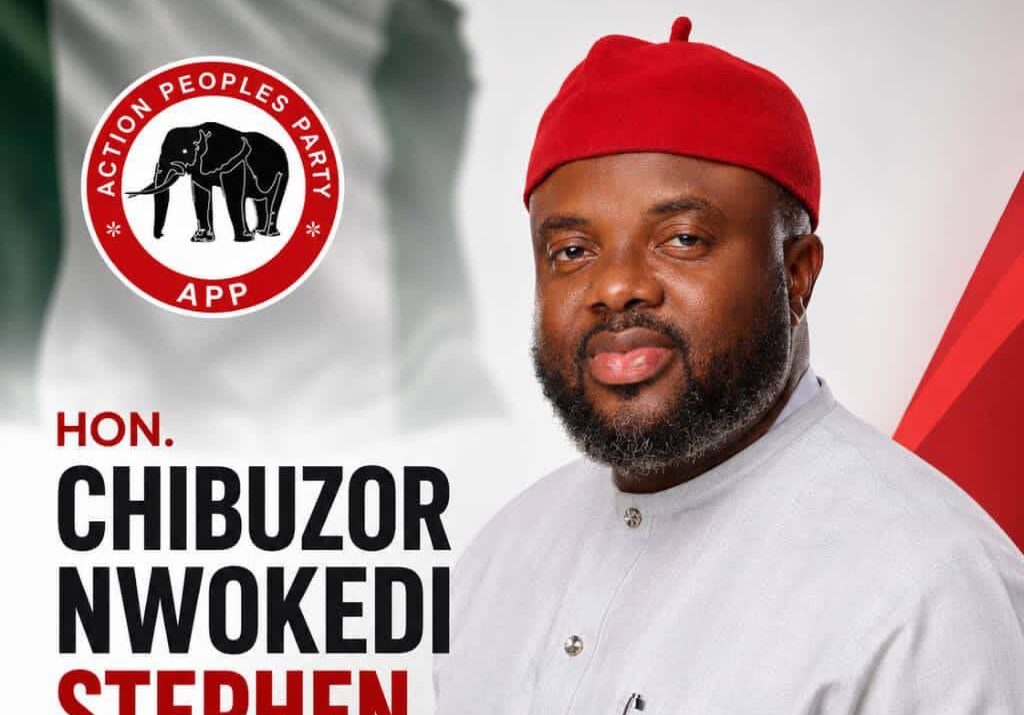
It is against this background that the emergence of Hon. Chibuzor Nwokedi Stephen, the Action People’s Party (APP) candidate for Isiala Mbano Constituency, has added a new dimension to the political conversation.
Nwokedi Stephen has presented himself as a candidate determined to challenge what he regards as the shortcomings of conventional representation and to pursue a more proactive, grassroots-oriented approach to governance.
His campaign message is anchored on the proposition that Isiala Mbano deserves a stronger dividend of democracy, with greater attention to infrastructure, human development, youth empowerment and community-focused representation.
His political proposition is, in essence, a promise to turn the tide and pursue a different model of representation—one in which the needs of the people across the twelve wards occupy the centre of political decision-making.
Whether that promise will ultimately translate into measurable results is a question that only time, governance and accountability can answer.
But its emergence has undoubtedly intensified an important public conversation:
Must Isiala Mbano continue with the old political pattern, or is the time ripe for a fundamentally different approach to representation?
THE PEOPLE WANT RESULTS, NOT EXCUSES
After 26 years, blaming predecessors cannot be the permanent language of governance.
Every administration inherits problems. Every administration also inherits opportunities.
The real measure of leadership is what it does with both.
Citizens are increasingly interested in results rather than explanations.
They want to know why roads remain problematic.
They want to know why young people continue to struggle for meaningful opportunities.
They want to know why some communities appear persistently underserved.
They want to know what happened to development promises.
And they want representatives who will remain accountable long after the ballots have been counted.
A MOMENT OF POLITICAL RECKONING
The debate in Isiala Mbano should therefore transcend party colours.
It should be about development versus stagnation; accountability versus impunity; measurable performance versus perpetual promises.
PDP and APC have a political history in Imo State that deserves scrutiny.
The APP and other emerging political forces have an opportunity to articulate alternatives.
And the people have the ultimate responsibility of examining every promise, every record and every proposition critically.
The standard should be simple:
What can be delivered?
How will it be delivered?
When will it be delivered?
How will the people measure it?
AFTER 26 YEARS, ISIALA MBANO DESERVES AN ANSWER
The people of the twelve wards should not have to wait indefinitely for the basic dividends that democracy is expected to produce.
They deserve functioning infrastructure.
They deserve opportunity.
They deserve accountability.
They deserve representation that works.
And they deserve a political culture in which public office is understood as a mandate to serve—not a reward to possess.
The coming political contest therefore presents an opportunity for a broader conversation about the future of Isiala Mbano.
For Hon. Chibuzor Nwokedi Stephen and the APP, the promise is to turn the tide and bring a stronger dividend of democracy to the people.
For the established political parties, the challenge is equally clear:
If the record is strong, show the evidence.
If it is inadequate, acknowledge the gaps.
And if the people are still waiting, then the most important question of all remains:
HOW MUCH LONGER MUST ISIALA MBANO WAIT?
.. Chigozie Ubah Stephen is the Senior Media Aide to Hon. Chibuzor Nwokedi Stephen.