
By Okechukwu Ajoku
Owerri Zone
Ohaji did not start speaking today.
Ohaji spoke in 1976.
In political discourse, communities are often dismissed as “late” whenever they raise questions during moments of structural change. History, however, has a way of unsettling convenient narratives. Ohaji’s case is one such disruption because it is anchored not in emotion, but in record.
Historical Facts That Cannot Be Erased
Before the creation of Imo State, Ohaji remained entirely within the former East Central State, …untouched,…undivided, and…undisputed. When Imo State was created in February 1976, Ohaji became formally part of it. There was no controversy. No transfer. No reassignment.
Ohaji’s inclusion was natural, geographic, and historically consistent.
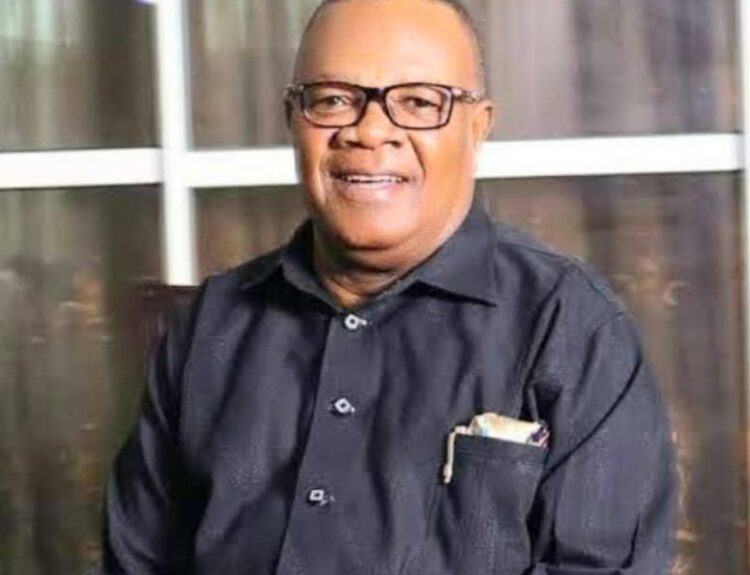
What gives this fact exceptional weight is that one of the men who objected, fought, and signed the relevant documents during that era is still alive today.
It is evidential and a historical hammer.
Once a community has documented objections and signed records from the era of state creation, its present position can no longer be dismissed as sentiment, opportunism, or “late agitation.” Such records establish continuity, a position that predates today’s social-media noise, partisan convenience, and distant bureaucratic interpretations.
Presence, Not Passivity
If a community objected and signed papers in 1976, three facts follow clearly.
First, the community was present in the process, not as spectators, and not as confused villagers unaware of unfolding events. They engaged deliberately then, just as they are engaging now.
Second, they objected because they foresaw injury—political injury, cultural injury, territorial injury, and identity injury. These were not abstract fears, but grounded concerns about belonging, access, and long-term survival within emerging state structures.
Third, their position has been consistent, not reactive. Continuity is not stubbornness; in governance, it is evidence of conviction.
The Living Signatory as Evidence
That surviving signatory from 1976 is not merely an elderly observer of history. He is a living witness to what was signed, a living bridge between past and present, and a human archive—able to name names, places, meetings, and reasons.
In politics, the most difficult thing for false narratives is not protest or noise.
It is a witness.
This single fact significantly strengthens Ohaji’s moral and historical case.
Ohaji is not a footnote in Imo State’s political history.
Ohaji is a strategic pillar.
Zoning Ambiguity and Administrative Confusion
Part of Ohaji’s present concern arises from a long-standing ambiguity created by administrative convenience rather than deep structural review. Ohaji’s grouping with Egbema under a single local government arrangement has, over time, produced confusion—particularly as zoning frameworks and the Charter of Equity evolved.
This has raised a legitimate governance question for Ohaji:
Where exactly does Ohaji belong within current zoning expectations and future state-creation proposals?
This is not rebellion. It is clarity-seeking.
Zoning is a political tool, not a sacred text. Tools must be reviewed when realities change. Administrative groupings that once served expediency may no longer reflect access patterns, economic gravity, or lived identity.
Ohaji and Owerri: Shared History, Shared Responsibility
Ohaji’s voice does not diminish Owerri Zone’s position in Imo State. It strengthens it—by grounding political choices in documented history rather than convenience.
Ohaji strengthens Owerri demographically.
It reinforces Owerri culturally.
It anchors Owerri geographically toward the oil-producing belt.
And it embodies centuries of shared history that long predate contemporary political arrangements.
In practice, Ohaji residents access major institutions, markets, education, healthcare, and administrative services predominantly through the Owerri axis. Transport connectivity, economic interaction, and daily governance reality consistently flow through Owerri. Functionally, Owerri already operates as Ohaji’s administrative spine.
When governance access flows persistently through a particular hub, that hub becomes the functional centre—regardless of formal labels.
State Creation and Functional Governance
The renewed conversation around proposed state structures, including an Orlu-based state, did not create Ohaji’s questions; it clarified them by forcing access, distance, and service-delivery issues into the open.
A state capital is not symbolic; it is operational. Citizens rely on it for courts, ministries, healthcare referrals, education oversight, security coordination, land documentation, and regulatory approvals.
If a community must routinely pass through another zone to access its proposed capital, governance becomes administratively awkward. Raising this concern early is not obstruction, it is prudence.
Clarifying Intent
This intervention is not directed against any arm of government, security agency, or constituted authority. It is a civic contribution aimed at strengthening governance outcomes by ensuring that historical records, institutional access, and community realities are properly considered in ongoing policy deliberations.
Democracies are healthiest when questions are asked early, evidence is examined calmly, and adjustments are made without crisis.
A Note to Critics
To those inclined to label this position as revisionist or opportunistic, one point must be made calmly but firmly: history does not become invalid because it is inconvenient. Documented objections and living witnesses are not political tools; they are records. Engaging them honestly strengthens democratic conversation. Ignoring them weakens it.
Conclusion: History as Guide, Not Obstacle
This is not an argument of accusation. It is a reminder that shared history carries shared responsibility.
History has spoken, and leadership now has the opportunity to engage it constructively.
Ohaji spoke in 1976.
Ohaji documented its position.
Ohaji’s witness still lives.
Listening to that voice does not weaken governance. It strengthens it, by ensuring that future decisions rest on truth, access, and lived reality rather than assumption.
In a democracy, the strongest leadership is not that which avoids questions, but that whose record and reasoning are strong enough to withstand them..