
By EMEKA Omeihe
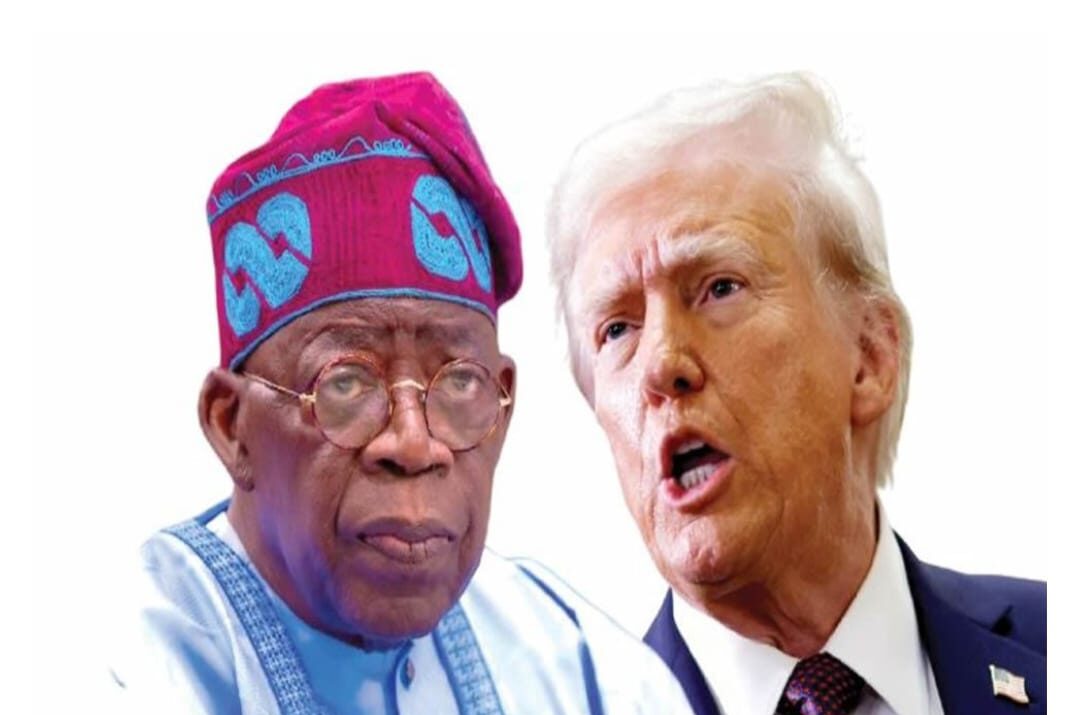
Nigeria’s designation as ‘Country of particular Concern’ (CPC) by President Donald Trump of United States of America (USA) and his threat of military action, re-opened the controversy on Christian persecution and genocide which some foreign media platforms had labelled terrorism-induced killings in the country.
The federal government had while admitting the challenges of insecurity, faulted the attempt to read it from the lenses of religious persecution or genocide. Copious interventions were also made by officials to show that Moslems and Christians are equally targeted and killed by terrorists, to fault the imputation of Christian persecution into the killings.
In spite of these efforts, Trump penultimate weekend, gave official backing to the narrative, claiming “Christianity is facing an existential threat in Nigeria”, even as he held radical Islamists responsible. A few hours later, Trump threatened military action and made good the threat by requesting a war plan from the Department of War. Reports have it that a war plan has already been submitted to him.
The sequence of Trump’s response to the Nigerian situation, must have jolted not a few Nigerians and observers. This could be discerned from the discordant reactions that have since inundated the political space. Not unexpectedly, the implications of the threat have been variously interpreted and understood.
Some saw it as a signal of imminent attack by the US military on Nigerian soil, while others read transactional undertones to the threat. Yet, there were those who were quick to scapegoat on individuals or groups whose activities allegedly aided Trump in reaching his decisions.
Disingenuous profiling by some commentators of the activities of self-determination groups as the reason for the US action also joined the fray. Suddenly, imprimatur of odious past; where a cartoon in a foreign country considered offensive by religious extremists, was capitalised upon to kill and maim innocent citizens, began to creep in.
Those who trade this path have a hidden purpose. They thought they were defending the federal government. But beneath this insincere effort, lay the contradictions that brought the country to the current pass. The attempt to pitch one part of the country against others, or hang national misfortunes on the neck of one group or the other has been the greatest undoing of this country. And it will continue to be so unless its enablers are reigned in.
Such insincere efforts lay barefaced, the fault-lines of our federal order. Ironically, you find in this tendency, the oxygen that sustains citizen’s inability to form consensus on issues of our national being which situations like this demand.
Even then, issues relating to killings in the country either of Christians or Moslems by terrorists and religious extremists are not hidden. The media space is awash with presentations (documentary or otherwise) from the clergy on their encounters in the senseless killings.
At that rate, it will be patently mischievous on the part of anybody to live in the deceit that the US State Department has no knowledge of the complexities of the metastasizing insecurity in the country. Not with the prior designation of the country as CPC by the same Trump during his first tenure.
Not with the sale and delivery to Nigeria of Tucano fighter jets by the US during the last administration to aid the fight against terrorism. The Nigerian pilots that manned those Tucano jets were trained by the US government at Moody Air Force base, Georgia in the US.
The US works with Nigerian intelligence agencies and the military to enhance intelligence sharing and develop strategies for counter-terrorism. It is inconceivable that the same government could be naïve of the complexities posed by insecurity in the country.
The situation does not call for scapegoating. Neither is it a time to point accusing fingers on imaginary enemies, political foes. Toeing such lines will end up activating the dialectics that brought about the current pass.
The situation calls for realism and diplomacy. These cannot be achieved by pushing forward the hackneyed argument that terrorists kill Moslems and Christians as if human life has become a common, easily dispensable commodity. It should offend public sensibilities that citizens are killed in those numbers without any end in sight. There is everything wrong in the seeming justification of the killings on the ground that Moslems and Christians are killed.
Beyond this, Trump’s threat should reawaken our collective consciousness to the existential danger terrorism is. He has issues with the continuing terrorism in the country and the inability of government’s efforts to stem the tide. He may not put boots on the ground, though it is difficult to predict him. He may not even attack the terrorists without the cooperation of our military given the difficulty associated with asymmetric warfare. If the target is to conclusively defeat the terrorists, it will take careful planning and execution in conjunction with the Nigerian military.
So, the value of threat lies more in focussing world attention to the recurring killings in the country by religious fundamentalists pursuing some weird ideology. It is a call on the Nigerian authorities to take drastic measures to eliminate terrorism from our shores. It is a campaign for the dignity of the human life.
President Tinubu was on this path when in his reaction, he said the characterisation of the country as religiously intolerant does not reflect our national reality nor does it take into account the consistent and sincere efforts of the government to safeguard freedom of religious beliefs of all Nigerians. He has further promised to eliminate terrorism. That is the direction.
It must be noted however, that the driving force of the terrorists and their profile are major issues in the way they are perceived both by the international community and our nationals. In a recent discussion in Al-Jazeera featuring two Nigerians and one foreigner on Trump’s threat, the Nigerian participants strove strenuously to counter the narrative of Christian persecution and genocide. As usual, they pointed at the killing of Christians and Moslems to counter such label.
When asked the drivers of the killings, they fingered religious extremism and developmental issues. They spoke of Boko Haram, Islamic State of West Africa Province, bandits and killer herdsmen.
Some of these terrorist groups have as their mission, the institution of a theocratic state in the country. They want sharia laws to be the ground norm in a secular state. So, their objectives and targets are not hidden. The fact that there is no official policy in support of their weird doctrinaire does not in any way, diminish their agenda.
If they have their way, they will enforce their goal on other religious adherents. That they equally kill Moslems who do not share their ideology, does not remove anything from their agenda. That should constrict the potency of the argument about killing Christians and Moslems as guise for playing down the consuming danger.