
“The election is about winning a seat; representation is about knowing what to do with it”
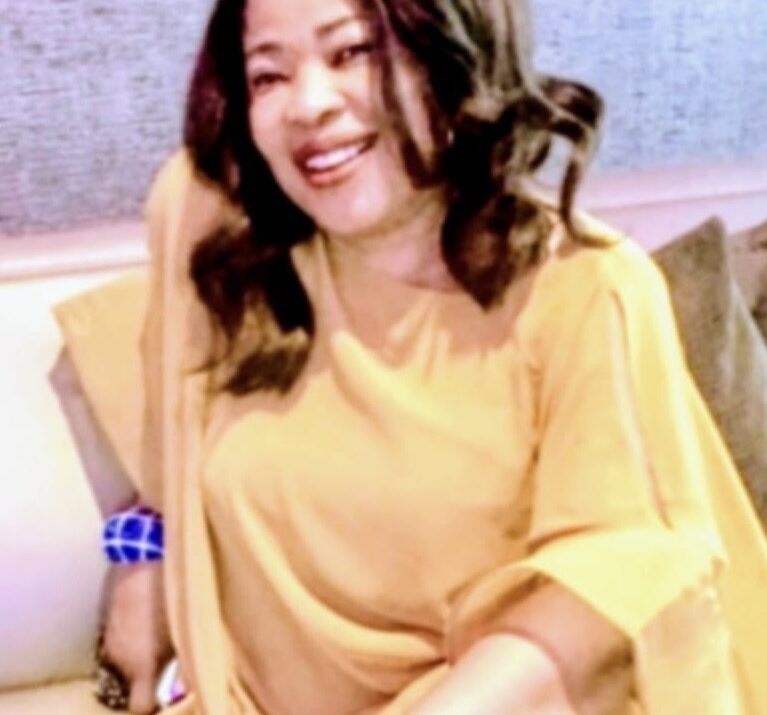
EziAda Anne N. Onyeneho Maduako is a multidisciplinary professional whose career spans business management, procurement, marketing, cardiovascular diagnostic studies and patient healthcare. She holds a Bachelor of Business Administration in Management and Procurement, an MBA in Marketing, and specialised training in Diagnostic Doppler Cardiovascular Imaging and Patient Diagnostic Report Writing. Her professional journey has included both corporate and healthcare environments, where she has demonstrated adaptability, leadership, patience and commitment to patient wellbeing.
A mother of five accomplished children distinguished across medicine, research, business, government contracting and engineering, she is also a passionate political activist deeply concerned about the future of Okigwe Zone. That concern underpins her support for Attorney Charles Onyirimba’s 2027 Senate ambition.
In this wide-ranging interview, she explains why she believes Onyirimba offers Okigwe a departure from conventional politics and why she wants voters to judge the candidate, and every alternative, by capacity, vision, record and results.
*What, ultimately, is the strongest reason Okigwe Zone should consider Charles Onyirimba in 2027?*
Capacity.
I would put it very simply: we need to stop asking only who can win an election and begin asking who can actually perform after winning it.
What attracts me to Onyirimba is the combination of capacity, experience, vision and commitment.
He has legal training, international exposure, political experience and community engagement experience.
But beyond the résumé, he appears to understand that being a senator is a responsibility.
That is important to me.
*What do you think Okigwe Zone has been missing from its representation?*
Strategic and consistent representation.
Too often, politics becomes highly visible during campaigns and much less visible when the real work begins. A senator should be continuously looking for opportunities for his constituency.
He should understand legislation. He should understand federal institutions. He should know how to lobby. He should build relationships. He should pursue development projects. He should advocate for his people and keep their interests alive in national conversations. That is what I mean by result-oriented representation. Okigwe Zone does not need somebody simply to occupy a seat in Abuja. We need somebody who can make the seat count.
*What makes Onyirimba different from the conventional politician?*
His background.
His professional and life experiences were not built entirely around Nigerian partisan politics.
He has worked outside the conventional political environment, acquired professional qualifications and developed international relationships and exposure. That gives him a broader perspective. Again, I am not saying he is perfect. No candidate is. But I believe his background gives voters a reasonable basis to expect a different approach to public service.
*How do you translate international exposure into something useful to a farmer or trader in Okigwe Zone?*
By converting exposure into opportunity. His legal training can be useful in understanding legislation, constitutional matters, contracts, government processes and regulation. His international experience can potentially help Okigwe Zone tap into Diaspora networks, development agencies, partnerships and investment opportunities.
The question should not be whether he has travelled or possesses degrees. The question is: What can he bring home?
If the farmer gets better access to markets, if the entrepreneur gets access to opportunity, if the young person gets skills or employment pathways, if infrastructure improves and if Okigwe gains stronger access to federal programmes, then those credentials have become useful. That is how I would measure them.
*Can political competence really defeat powerful political structures?*
Yes, but organisation is critical. A candidate without enormous political machinery cannot afford to be disorganised. He needs credible grassroots structures, disciplined communication, strong community engagement and people who believe in the message.
Money can bring people together temporarily. Conviction keeps people together. That is why I believe the Onyirimba campaign should focus on ward-by-ward and community-by-community engagement. Women and young people should be empowered. Credible local leaders should be identified. Traditional and digital media should be used intelligently. And the election should become a referendum on the quality of representation people want.
*You have talked about an “Okigwe Peoples Party.” Explain that idea.*
It is a philosophy. I am not referring necessarily to a political party registered with INEC. I mean that an Okigwe voter should regard Okigwe as the ultimate political interest. Party logos will come and go. Political alliances will change. Godfathers will change. But Okigwe remains.
Therefore, before a voter asks which party a candidate belongs to, the voter should ask: What will this person do for Okigwe? What capacity does he have? What does his record show? What is his agenda? Who will he be accountable to? That is the essence of the Okigwe Peoples Party philosophy.
*What is your view of godfatherism and vote-buying?*
They become powerful when voters believe their individual votes have little value. We need to change that mentality. I am not going to pretend that money does not influence elections. It does. But we should educate voters about the difference between a temporary benefit and a four-year decision.
A bag of rice may last for a few weeks. A small cash gift may disappear in days. But a poor representative can affect an entire zone for four years.
Our campaign should not intimidate anyone who accepts assistance. Nor should we engage in counter-vote-buying. We should educate voters and protect their freedom to make the final decision.
*What would you tell a voter who says, “Everybody makes promises”?*
I would say: You are right. That is precisely why voters should not believe anybody blindly. Ask candidates to be specific. What will you pursue?
What are your priorities? What legislation will you support? Which federal institutions will you engage? Which projects will you lobby for? How will you report back? And where there is a previous record, ask what was promised and what was delivered. That is how voters should separate political rhetoric from genuine commitment.
*What are the three biggest issues you believe Onyirimba should confront?*
Infrastructure and economic connectivity. Youth economic opportunity.
And stronger access to national opportunities and institutions. Poor roads and weak infrastructure affect everything, from agriculture and commerce to investment and mobility. Our young people need meaningful economic opportunities. Too many are leaving because they increasingly believe that their future lies elsewhere.
And Okigwe needs stronger advocacy at the federal level so that programmes, infrastructure, investments and development opportunities do not continually pass us by. A senator cannot solve everything.
But an effective senator can use legislation, oversight, lobbying, constituency projects, partnerships and federal connections to make progress.
*What should young people expect from Onyirimba?*
Not unrealistic promises. I would not tell young people that he will create government jobs for everybody. That is not realistic. But he can use his connections to help people access opportunities where they exist. He can advocate for skills development, entrepreneurship, digital employment, vocational training, educational support and federal intervention programmes. His international and Diaspora connections can also potentially create pathways for credible young entrepreneurs and professionals.
Most importantly, young people should become partners in governance. They should participate in research, policy discussions, innovation, digital communication and constituency development, not merely appear at rallies.
*And what should women expect?*
A seat at the decision-making table. Women must move beyond being the people who organise rallies, mobilise voters and disappear from the political process after elections. They should participate in policy formulation, campaign administration, community engagement, entrepreneurship initiatives, youth development and constituency advocacy. And that should continue after election day.
Women are an enormous part of Okigwe’s intellectual, economic and social strength. That is why the appointment of a woman as campaign Director General is significant to me. It sends a message that women can occupy positions of responsibility and that their contribution goes beyond mobilisation.
*What should happen on the day opponents arrive with money?*
The voter should remember that accepting something does not mean surrendering the vote. Again, the key is education. If somebody offers you something, your decision is yours. But your PVC belongs to you. The most important thing is to understand that the election is not about the value of whatever somebody gives you that day. It is about the value of the representative you are choosing for four years.
*Suppose Onyirimba wins. What should voters expect immediately?*
Three things.
First, a clear legislative and development agenda for Okigwe, with measurable priorities.
Second, an aggressive effort to attract federal infrastructure and economic opportunities that improve connectivity, stimulate commerce and create employment pathways.
Third, a strong accountability and constituency engagement system: regular town halls, periodic reports and channels through which communities can communicate their priorities.
And then we should judge him ruthlessly but fairly. Not by photographs.
Not by birthday messages. Not by political noise.
By results. The standard should always be: What did he promise?
What did he pursue? What did he deliver?
*If you had only one minute to persuade undecided voters, what would you say?*
Ndi Okigwe, 2027 is not just another election. It is a choice. It is a choice about the kind of representation you want for the next four years. You have seen different styles of politics. You have seen promises kept and promises forgotten. So, this time, don’t ask only who has the biggest political structure. Don’t ask only who has the loudest supporters. Don’t ask only who has the deepest pocket.
Ask:
Who has the capacity to represent us effectively?
Attorney Charles Onyirimba comes with legal training, professional experience, international exposure and connections, political experience and a stated determination to put Okigwe’s interests at the centre of his representation.
But I will not tell you to vote for him simply because I support him.
Examine him. Examine the alternatives. Compare their capacity. Compare their vision. Compare their records. Then make your choice.
Because in 2027, Okigwe must choose wisely, not merely loudly.