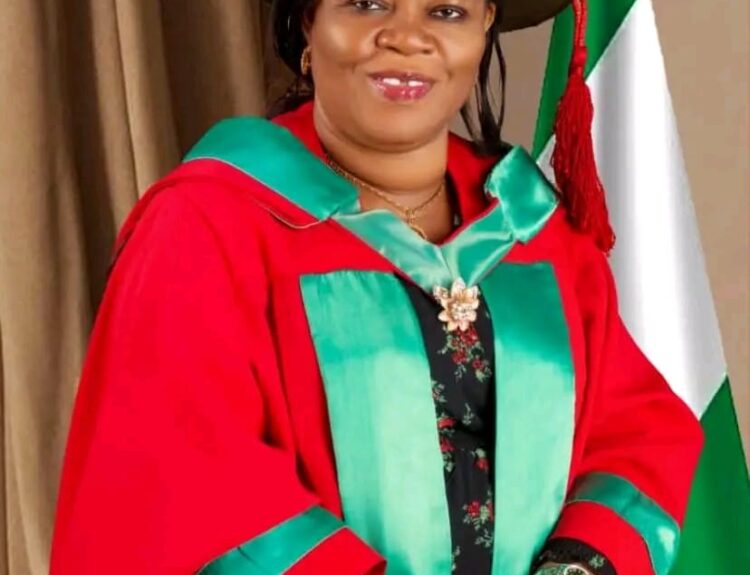

By Chief Okey Ikoro (JP, NPOM)
Chairman, Arondizuogu Board of Trustees
The debate over the Imo Charter of Equity has once again taken centre stage in our political discourse. Across communities, social media platforms, traditional institutions and political circles, conversations revolve around which zone should produce the next governor of Imo State.
While equity and fairness remain noble principles in any democratic society, we must ask ourselves a fundamental question: Is the Charter of Equity alone enough to solve the problems confronting Imo State?
Perhaps the time has come for us to shift the conversation from where the governor comes from to how the governor governs.
What Imo State urgently requires is not merely a Charter of Equity, but a Charter of Good Governance.
For decades, political power has rotated among different zones in one form or another. Yet the ordinary citizen continues to grapple with poor infrastructure, youth unemployment, insecurity, declining public services, inadequate healthcare, weak educational systems, and limited economic opportunities. The geographical origin of our leaders has changed over the years, but the daily realities of many Imo people have remained largely unchanged.
A governor from my own community who governs poorly is of far less value than a governor from another zone who governs with competence, integrity, fairness and vision.
Good governance is what builds roads, not zoning.
Good governance attracts investment, not political agreements.
Good governance creates jobs, not ethnic calculations.
Good governance restores public confidence, not political slogans.
Equity should never become an excuse for lowering our standards of leadership. Rather, equity should exist alongside competence, character, capacity, experience and a genuine commitment to public service.
The next governor of Imo State must possess a clear economic vision capable of transforming the state’s vast agricultural potential, encouraging industrialisation, supporting small and medium-scale enterprises, creating employment for our youths, and restoring investor confidence.
He or she must be prepared to strengthen security, improve healthcare, modernise education, develop rural infrastructure, and manage public finances with transparency and accountability.
Imo deserves leadership that measures success not by political patronage but by measurable improvements in the lives of its people.
A true Charter of Good Governance would commit every aspiring governor to measurable standards. It would guarantee prudent management of public resources, transparent procurement processes, respect for the rule of law, independent institutions, quality education, affordable healthcare, sustainable infrastructure, security of lives and property, and policies that encourage private sector growth.
It would insist that appointments are based primarily on merit while ensuring inclusiveness and fairness across all parts of the state.
It would demand regular public accountability and open government where citizens know how public funds are spent.
Above all, it would place the welfare of the people above political interests.
History teaches us that prosperous societies are not built simply by rotating power among regions. They are built by leaders who possess vision, competence, integrity and the courage to make difficult but necessary decisions.
As Imo prepares for another political transition, let us elevate the conversation.
Instead of asking only, “Whose turn is it?”
Let us also ask:
Who has the capacity?
Who has the integrity?
Who has the vision?
Who has the courage to unite our people and move Imo forward?
A Charter of Equity may determine where power goes.
A Charter of Good Governance determines what that power achieves.
The people of Imo deserve both equity and excellence. But if forced to choose between the two, history will remember good governance long after political zoning has been forgotten.
The future of Imo State should never depend solely on geography.
It should depend on leadership.
That is the real chatter our state needs