
A Question of Representation and Responsibility in Ongoing State-Creation Deliberations
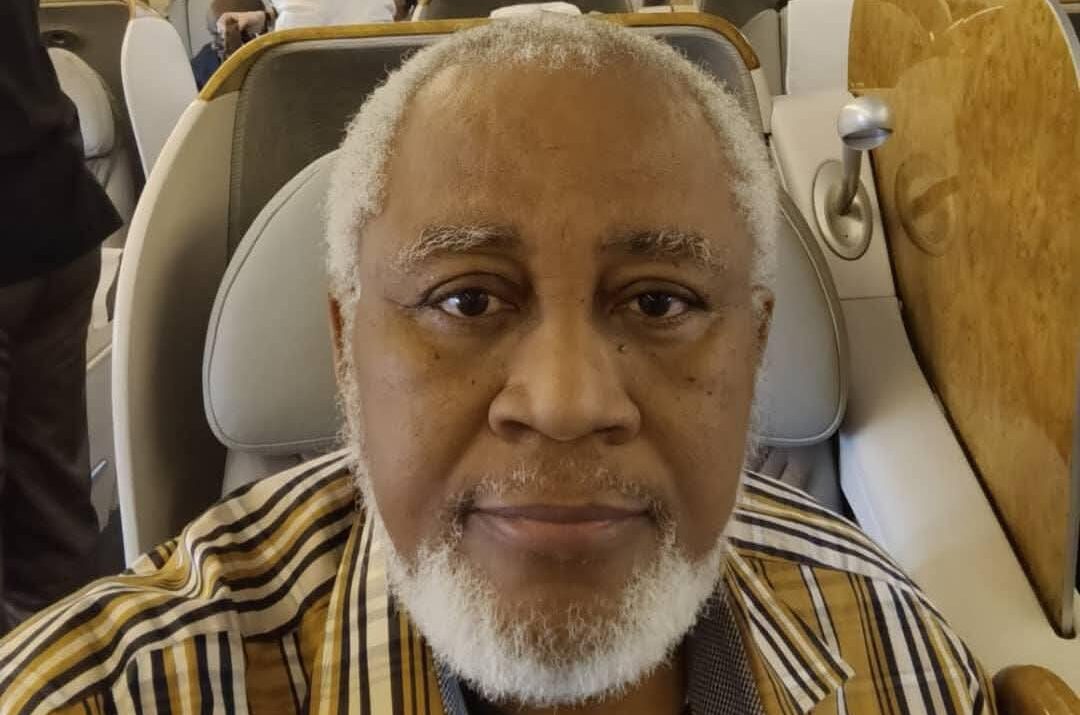
By Okechukwu Ajoku
Host, Justice Podcast
When my federal lawmaker, Hon. Tochukwu Okere, the Member representing Owerri Federal Constituency in the Federal House of Representatives, released a widely circulated scorecard listing an avalanche of achievements—often framed in a manner that overwhelms scrutiny—I am entitled, as a constituent, to ask what is conspicuously missing.
This intervention is not hostility.
It is accountability.
Representation is not a publicity contest. It is a duty of voice, presence, and consequence. While infrastructure projects matter, representation must extend beyond physical deliverables to include strategic advocacy on matters that define identity, belonging, and the future of a people.
One omission stands out clearly and cannot be ignored: Ohaji and its people.
When Ohaji Spoke, Who Answered?
When the people of Ohaji formally tendered their request—rooted in long-standing cultural, historical, kinship, educational, and ecclesiastical ties—seeking alignment with Owerri Zone in the context of ongoing state-creation conversations, this was not a casual appeal.
It was a strategic, cultural, and existential declaration.
Ohaji’s connection to Owerri Zone is neither abstract nor sentimental. It is lived and institutional:
Ohaji churches fall under the Catholic Diocese of Owerri, not Orlu.
Ohaji schools operate under Owerri educational supervision.
Centuries-old nwa-nwa (nephewhood) relationships bind Ohaji to Owerri communities.
Shared settlements, intermarriages, and ancestral bonds blur artificial administrative boundaries.
Ohaji occupies a strategic demographic and economic position that Owerri Zone cannot afford to treat lightly.
This was therefore not a matter for social-media debate. It was a matter for leadership and legislative advocacy.
The Questions That Must Be Asked
Accordingly, the question must be asked—plainly and without apology:
What was Hon. Tochukwu Okere, the Member representing Owerri Federal Constituency in the Federal House of Representatives, response when Ohaji made this request as it relates to proposed state-creation efforts?
Did he raise the issue on the floor of the House?
Did he engage relevant committees?
Did he issue a formal position statement?
Did he convene or join any delegation?
Did he meet the Ohaji delegation to address their concerns?
Did he align with Owerri Zone stakeholders to defend this cultural and political reality?
It is entirely possible that engagements occurred privately or informally. If so, the Owerri public deserves clarity—not speculation. On issues of this magnitude, representation is strengthened, not weakened, by transparency.
In matters of this scale, silence becomes a position.
State-Creation Bills Are Not Academic Exercises
At the same time Ohaji was speaking, state-creation proposals were already active in the Senate and the House of Representatives—including discussions around an Orlu State, Anioma-linked configurations, and other realignments capable of permanently redrawing Imo State’s political map.
These are not rumours. They are live legislative processes.
And Hon. Tochukwu Okere, the Member representing Owerri Federal Constituency in the Federal House of Representatives, is not a bystander. He occupies a strategic seat at the very table where such decisions are shaped.
Owerri people—including myself—are therefore entitled to ask:
Where does he stand on these state-creation proposals?
How does he reconcile those proposals with the expressed position of Ohaji people?
Did he file, support, oppose, or seek to amend any bill affecting Owerri’s territorial and cultural future?
Did he defend Owerri Zone’s strategic interests where it truly counts—inside parliament?
Let it be stated without equivocation:
Owerri Zone without Ohaji is weakened—demographically, culturally, and politically.
Any representative who ignores this reality while flooding the media with empowerment lists risks mistaking activity for leadership.
Projects Matter — But Representation Is Bigger
Yes, classrooms matter.
Yes, solar lights matter.
Yes, bills and motions matter.
But history will not judge a representative solely by the number of projects listed. History asks harder questions:
Did you stand up when Owerri and Ohaji identity was at stake?
Did you speak when boundaries were being redrawn?
Did you act when silence could cost your people their future?
The absence of visible advocacy on Ohaji in a heavily marketed scorecard is precisely why accountability is being demanded—because Hon. Tochukwu Okere represents me and the people of Owerri Federal Constituency.
Elected federal lawmakers bear a higher burden precisely because they sit where consequences are decided.
If Hon. Tochukwu Okere, the Member representing Owerri Federal Constituency in the Federal House of Representatives, has intervened, spoken, or acted on the Ohaji question or on state-creation bills affecting Owerri Zone, the people deserve to know—formally, publicly, and on record.
Constituents are not obligated to applaud first and ask questions later.
We ask now.
A Note to Critics
To those quick to dismiss this intervention as hostility or “politics against a man,” let it be said clearly: asking questions is not opposition; silence is not loyalty.
Democracies grow stronger when representatives are questioned, not when supporters attempt to shut down inquiry with insults or slogans. If the record exists, scrutiny will only strengthen it.
A Word to Owerri Zone
Owerri Zone’s strength has never been noise or numbers alone. It has always been foresight—the ability to anticipate political shifts before they harden into irreversible realities.
The Ohaji question is not sentimental.
It is strategic.
It is cultural.
It is existential.
And on matters this fundamental, silence is a position.
In a democracy, the strongest leaders are not those beyond questioning, but those whose records are strong enough to endure it.