

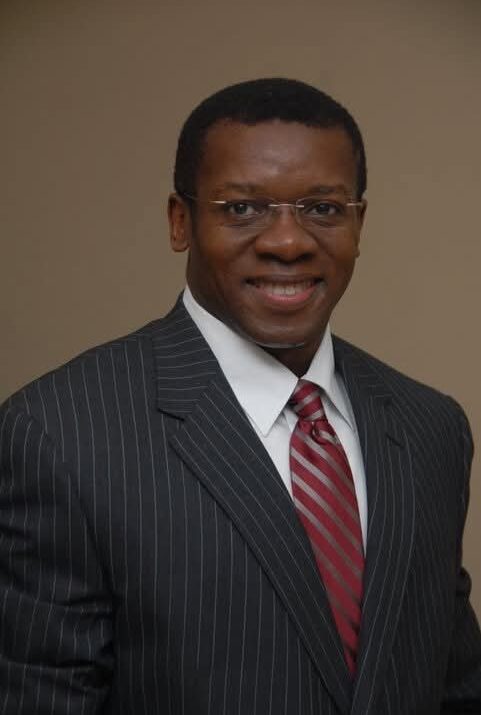
By Mazi Uche Ohia, Ph.D
In the restless theatre of Nigeria’s political evolution, certain moments or movements – once dismissed, even ridiculed – return with renewed relevance. One such moment is the audacious intervention of Daniel Kanu in 1997/1998 through the Youths Earnestly Ask for Abacha (YEAA) movement. At the time, his orchestration of the now-famous One Million Man March in support of Sani Abacha was widely condemned as political opportunism and an endorsement of authoritarianism. Yet beneath that controversy lay a deeper philosophical proposition – one that Nigeria, and indeed Africa, has yet to resolve: what system of governance truly works for us?
Nearly three decades later, Nigeria is confronted by endemic corruption, insecurity, economic fragility, and a democracy increasingly perceived as elitist and ineffective. In this context, Kanu’s once-dismissed vision demands a sober re-examination – not as nostalgia, but as a serious contribution to the ongoing search for a functional African political system.
YEAA: The Philosophy Beyond the Rally
To reduce YEAA to a pro-Abacha spectacle is to miss its intellectual core. Kanu has consistently argued that his involvement in that era was driven by a belief in structured development, youth empowerment, and national discipline, as reflected in initiatives such as Vision 2010.
His central thesis was bold: Western liberal democracy, transplanted into African societies without adaptation, has struggled to deliver stability, development, or accountability. In its place, he proposed a model of benevolent dictatorship – a system anchored on strong, centralized leadership capable of enforcing discipline, curbing corruption, and driving long-term national development.
At the time, this argument was widely rejected. Today, it resonates with growing unease.
Democracy in Nigeria: Gains Without Transformation
Since the transition to civilian rule in 1999, marked by the election of Olusegun Obasanjo, Nigeria has sustained its longest democratic period. There have been notable gains: expanded civil liberties, a more vibrant press, and regular electoral cycles.
Yet these gains have not translated into structural transformation. Elections are frequently undermined by irregularities and monetization. Political parties lack ideological depth, serving primarily as vehicles for elite negotiation. Governance often appears detached from public needs, while corruption persists within institutions meant to combat it.
What has emerged is not a democracy of the people, but a democracy of the powerful – an aristocratic democracy in which a narrow elite circulates power among itself. The form of democracy exists, but its substance is weakened.
Gerontocracy and the Crisis of Leadership
Compounding this problem is the persistence of gerontocratic dominance. Political power remains concentrated in the hands of an aging elite, limiting generational renewal and innovation.
Leadership recruitment is shaped less by merit than by networks of patronage and wealth. As a result, new ideas struggle to emerge, and old failures are recycled. In such a system, democracy risks becoming a mechanism for preserving privilege rather than advancing progress.
It is precisely this stagnation that Kanu’s proposition sought to challenge.
Strong Leadership and Development: Global Evidence
What once appeared theoretical in Kanu’s argument has been demonstrated in practice across different parts of the world.
The transformation of Dubai under Mohammed bin Rashid Al Maktoum illustrates the power of centralized vision and execution. Within decades, Dubai evolved from a modest trading port into a global hub for commerce, tourism, and innovation – driven by policy continuity and decisive governance.
Likewise, Singapore under Lee Kuan Yew stands as a classic case of disciplined leadership producing sustainable development. From a vulnerable, resource-poor state, Singapore became one of the world’s most efficient and prosperous societies, anchored on meritocracy, strict anti-corruption measures, and long-term planning.
In Africa, Rwanda under Paul Kagame demonstrates a similar pattern. Emerging from the devastation of genocide, Rwanda has built a reputation for order, efficiency, and steady development – fueled by strong central authority and a zero-tolerance stance on corruption.
Across these examples, a consistent pattern emerges: decisive leadership, disciplined institutions, policy continuity, and a clear national vision.
Reconsidering Benevolent Dictatorship
To speak of dictatorship is to evoke legitimate concerns about repression and abuse. Yet Kanu’s proposition was not a defense of tyranny, but a call for functional authority – leadership capable of acting decisively in the public interest. The argument is grounded in observable realities:
▪️Development requires speed and clarity, often constrained by political gridlock
▪️Corruption thrives in weak systems, not disciplined ones
▪️Long-term progress depends on policy continuity, not electoral disruptions
▪️Stability is sustained by order and enforcement, not permissiveness
In this context, the idea of a benevolent dictatorship becomes less an ideological endorsement and more a pragmatic question: can strong, accountable leadership accelerate development where democracy has faltered?
Africa’s Governance Dilemma
Across much of Africa, democratic institutions exist, but outcomes remain inconsistent. Elections are held, yet governance often fails to deliver security, prosperity, or public trust.
This reflects not only leadership deficits but also structural misalignment. Systems imported without sufficient adaptation struggle to reflect local realities. The result is a hybrid order – neither fully democratic nor authentically indigenous.
Kanu’s intervention compels a difficult but necessary question: should Africa continue to imitate external models, or begin to evolve its own?
Toward a Functional Political Order
A return to Daniel Kanu’s vision need not imply the abandonment of democracy, but its recalibration. The path forward may lie in a hybrid model that combines:
▪️The decisiveness of strong leadership
▪️The accountability of democratic frameworks
▪️The cultural legitimacy of traditional governance systems
Such a model would prioritize results over ritual, discipline over disorder, and national interest over elite bargaining.
Conclusion: An Unfinished Debate
History often redeems ideas once dismissed. The debates surrounding Daniel Kanu and YEAA are no longer confined to the past: they are echoed in present-day frustrations with governance in Nigeria and across Africa.
As corruption, insecurity, political intolerance and institutional weakness persist, the search for a functional political system becomes more urgent. In that search, Daniel Kanu’s vision – controversial though it remains – offers a provocative framework for rethinking governance.
Ultimately, the legitimacy of any political system lies not in its label, but in its capacity to deliver order, development, and dignity. Until such a system is firmly established, the question raised by YEAA will endure – challenging Africa to move beyond imitation toward innovation in governance.